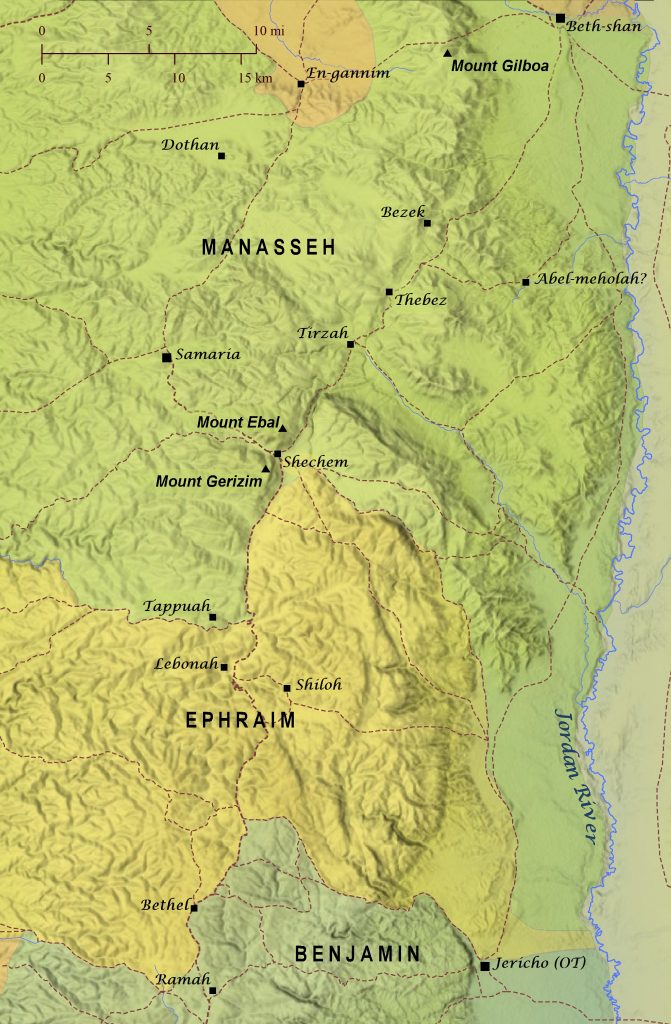
The ancient city of Shechem in the hill country of Samaria was a literal crossroads of activity during Bible times. Pivotally positioned between two mountains along a key road running through central Israel, Shechem was often regarded as part of the “heartland” of Israel. Here Abraham first offered sacrifices in the Promised Land (Genesis 12:6-7) and Joseph’s bones were later buried (Joshua 24:32). Here, too, the tribes of Israel were commanded by Moses to stand in front of Mount Gerizim and Mount Ebal and reaffirm God’s covenant by shouting out its blessings and curses to each other (Deuteronomy 11:26-32; 27:11-13; Joshua 8:33; see “The Covenant Is Renewed at Shechem” map). Shechem is also where the northern kingdom declared its independence from Judah and Jerusalem (1 Kings 12). Later the nearby city of Samaria would become the capital of northern Israel (1 Kings 16:23-24). The Samaritans built their rival temple on Mount Gerizim next to Shechem. Many years later at a well in the village of Sychar just outside Shechem, Jesus talked with a Samaritan woman and explained to her that he himself was the source of living water for all those who worshiped the Father in spirit and in truth (John 4:1-42; see “Jesus Speaks with a Woman in Samaria” map).
In 539 B.C., Cyrus the Great of Persia defeated the Babylonians, and a year later he decreed that the Judeans who had been sent into exile were allowed to return home and rebuild the Temple (2 Chronicles 36:22-23; Ezra 1:1-2). Under the leadership of Zerubbabel a small contingent of Judeans made the long journey and reestablished Judea as a very small district in the much larger Persian province called Beyond the River, which included most of the land along the eastern coast of the Mediterranean Sea. The Persian Empire continued to grow until it ruled virtually the entire Near East-–a domain about eight times the size of Texas. This vast empire was the world of Ezra, Nehemiah, and Queen Esther.
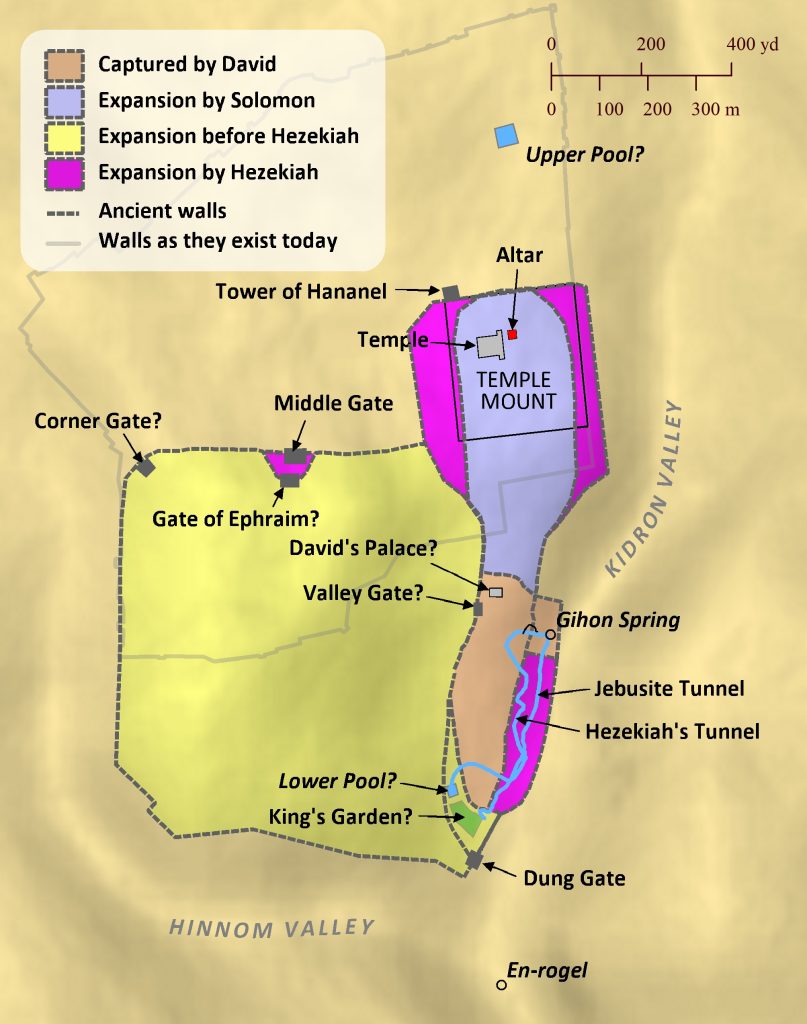
The city of Jerusalem underwent many changes throughout Bible times. When King David captured the city from the Jebusites (2 Samuel 5:6-10; 1 Chronicles 11:4-9), it was a relatively small fortress positioned next to the Gihon Spring–-a dependable source of water that later enabled the city to withstand various sieges (2 Kings 18:13-19:37; 2 Chronicles 32; Isaiah 36-37). King Solomon built the Temple of the Lord on a threshing floor north of the city (2 Samuel 24; 1 Chronicles 21), and the city continued to grow. King Hezekiah eventually expanded the walls to encompass a much larger area and replaced the old Jebusite tunnel with another tunnel (probably called Shiloah) to channel water more securely from the Gihon Spring to the Lower Pool (later called the Pool of Siloam/Shiloah) and the king’s garden. This new tunnel is probably what Isaiah 8:5-8 refers to when it rebukes the people of Judah for rejecting the gently flowing waters of Shiloah to support the Arameans. Many years later in 586 B.C. the Babylonians attacked the city, destroyed the city and the Temple, and sent many Judeans into exile (2 Kings 25:1-21; 2 Chronicles 36:17-21; Jeremiah 39:1-10; 52:1-30).
The Greek cities of Ephesus and Miletus, once prosperous port towns on the west coast of Asia Minor, have long since silted up (see modern shoreline in dark blue). Paul and John both conducted ministries in this region, and John was eventually exiled to the nearby island of Patmos (Acts 19; Revelation 1:9).
When Paul was being transferred to Rome under arrest (see “Paul’s Voyage to Rome” map), believers from Rome traveled down the Appian Way as far as the Forum of Appius to meet Paul and escort him back to Rome–a distance of 40 miles (Acts 28:13-15).